

Explore With us History of Lab Grown Diamonds and Guide to discover their origins and how they are formed. Dubai UAE
Lab grown diamonds at Tejori Dubai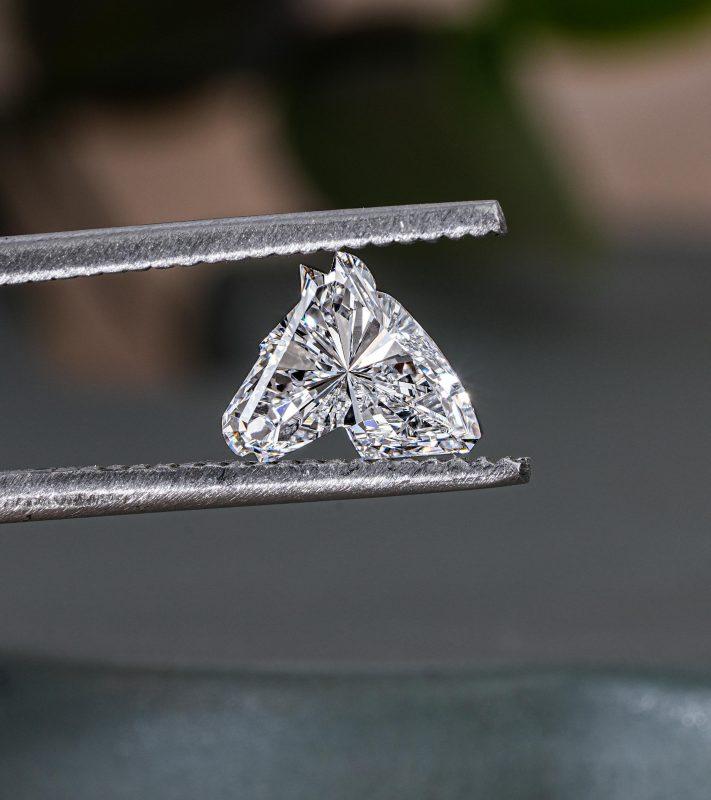
What are lab grown diamonds ?
Lab diamonds or man-made diamonds, also called cultured or cultivated diamonds. Scientists create them in controlled laboratories using advanced technology that replicates how natural diamonds form inside the earth.
In nature, diamonds develop over millions of years under intense heat and pressure. In a lab, experts use carbon, high pressure, and high temperatures to recreate these same conditions. This process produces diamonds with the same chemical structure and optical properties as mined diamonds.
When were lab diamonds first created ?
People claimed to make lab diamonds between 1879 and 1928, but none of those claims were proven. Verified progress began in the 1940s. In 1954, General Electric (GE) produced the first confirmed lab-created diamonds.
By the 1970s, gem-quality lab diamonds became available. In the 1980s, high-quality man-made diamonds entered the commercial market. Moreover, Over the past decade, technology has advanced significantly, making lab grown diamonds widely used in fine jewelry and engagement rings.
Where was the first batch of lab diamonds created ?
In 1954, General Electric (GE) produced the first confirmed batch of lab diamonds. Earlier, in 1941, GE formed a research team to develop man-made diamonds, but World War II delayed the project.
Around the same time, the Swedish electrical company ASEA also created lab diamonds. However, they kept their discovery confidential until the 1980s.
Who first invented the lab diamond creation process ?
In the early 1950s, H. Tracy Hall, a chemist at General Electric, developed the first reliable method to create lab diamonds. For centuries, scientists and researchers had tried to achieve this breakthrough.
The first lab diamonds were tiny and low in quality, making them useful mainly for industrial purposes. Furthermore, Over time, technology improved. Today, experts can produce man-made diamonds up to 12 carats for use in engagement rings and fine jewelry.
Modern lab diamonds now offer a wide range of color, clarity, and cuts that closely match natural diamonds.
How were lab diamonds made in the past ?
Henry Moissan, an early pioneer, claimed he created a diamond by heating charcoal to temperatures of about 3,500°C inside a carbon container. Many people tried to repeat his results, but most attempts could not be confirmed.
For years, manufacturers tried to grow diamonds the same way they grew other gemstones, but these efforts failed. Later, scientists refined laboratory methods and focused on recreating the intense heat and pressure found in nature.
In 1954, H. Tracy Hall introduced the belt press. Additionally, This machine generated the high heat and pressure needed to dissolve metals like nickel, cobalt, and iron and transform carbon into diamonds. Over time, these improved methods made lab diamonds suitable for engagement rings and fine jewelry.
How did lab diamond synthesizing change over the years ?
Over time, many people claimed to create diamonds in labs, but few methods could be reliably repeated. The first proven success came from copying nature using the high pressure, high temperature (HPHT) method.
Later, scientists introduced improved techniques such as the belt press, chemical vapor deposition (CVD), and modern cubic and split-sphere presses. These advanced methods larger, more efficient, and produce higher-quality lab diamonds.
How are lab diamonds made today ?
Today, scientists mainly use two advanced methods to create lab diamonds: high pressure, high temperature (HPHT) and chemical vapor deposition (CVD). Researchers around the world continue to improve the CVD process to match the size and quality achieved with HPHT.
Lab technicians constantly refine both methods to increase efficiency and scale. These improvements produce higher-quality lab grown rough diamonds that cutters can shape into many sizes and styles for jewelry.
How has the supply and demand for lab diamonds changed ?
Lab grown diamonds gave buyers a new option that reduced the need to source mined stones. In the early days, supply and demand stayed low because these diamonds were used mainly for industrial purposes. After the 1980s, gem-quality lab diamonds became available for commercial jewelry, and interest began to grow.
As more people learned about them, demand increased and many questioned if they were real. Lab grown diamonds chemically, physically, and optically identical to mined diamonds.
Today, lab diamonds make up about 2–3% of the diamond engagement ring market. While mined diamonds remain a traditional choice, lab grown diamonds offer a more cost-effective alternative.