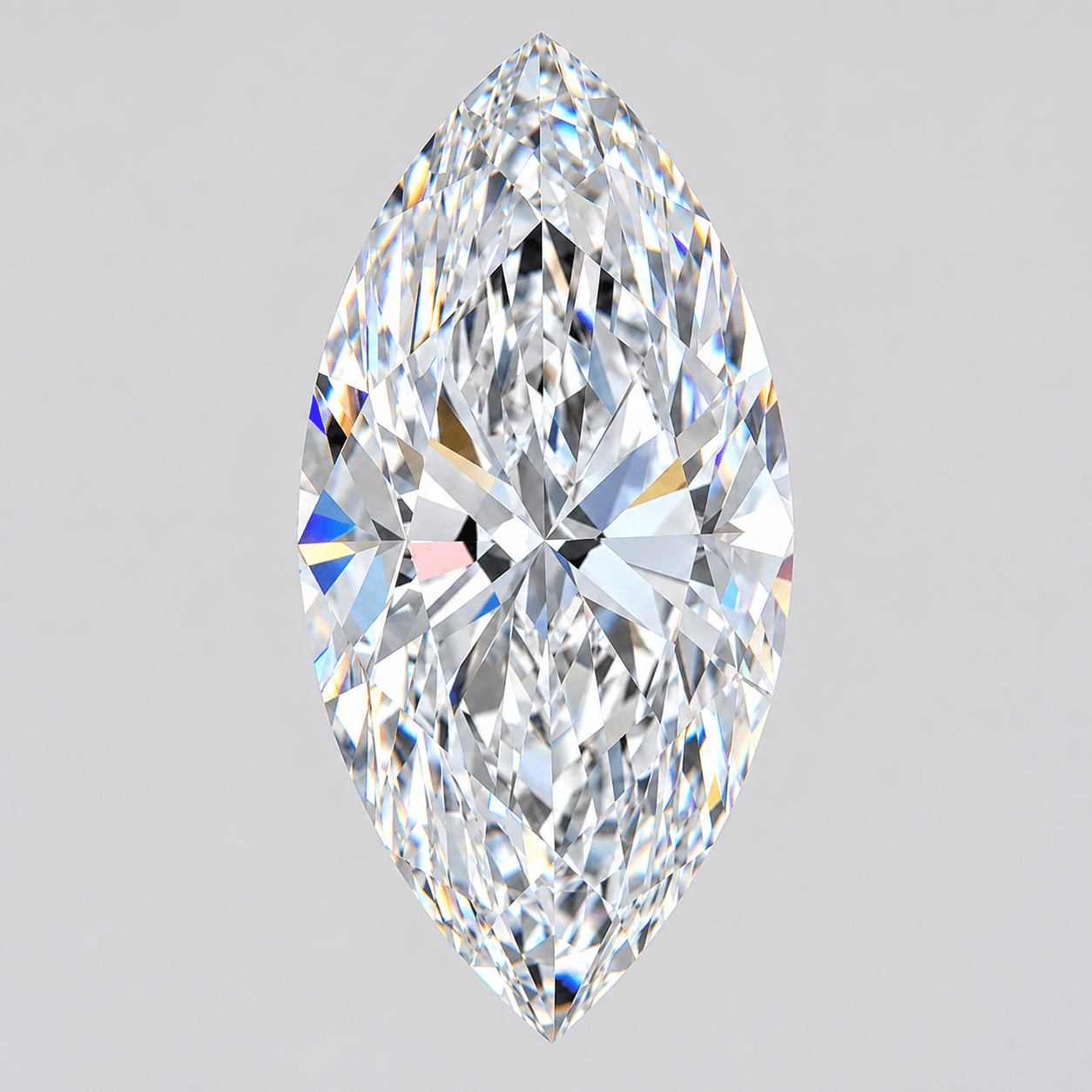
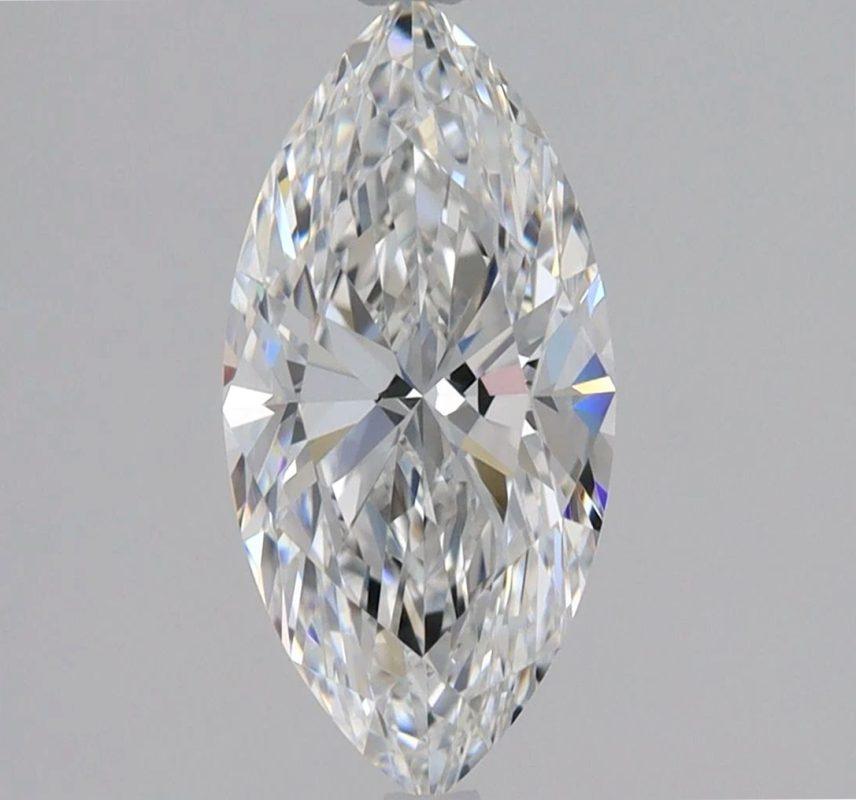
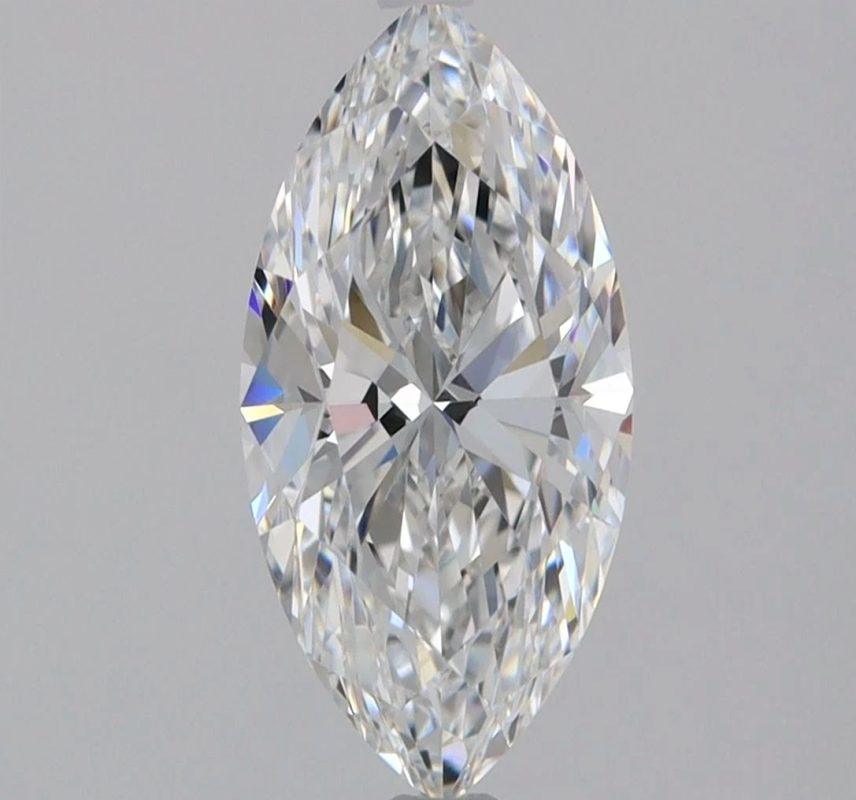
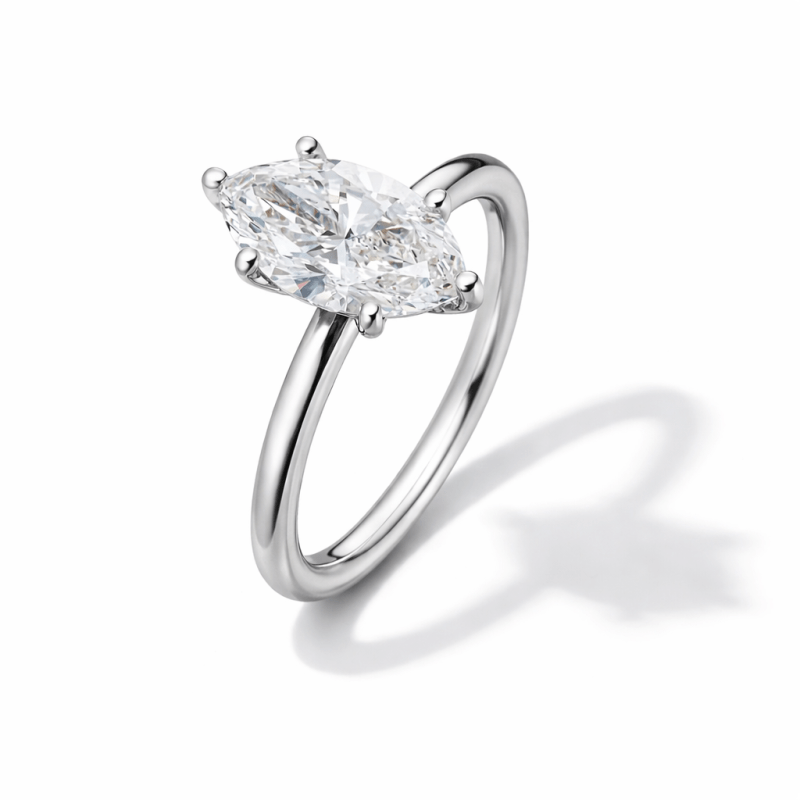
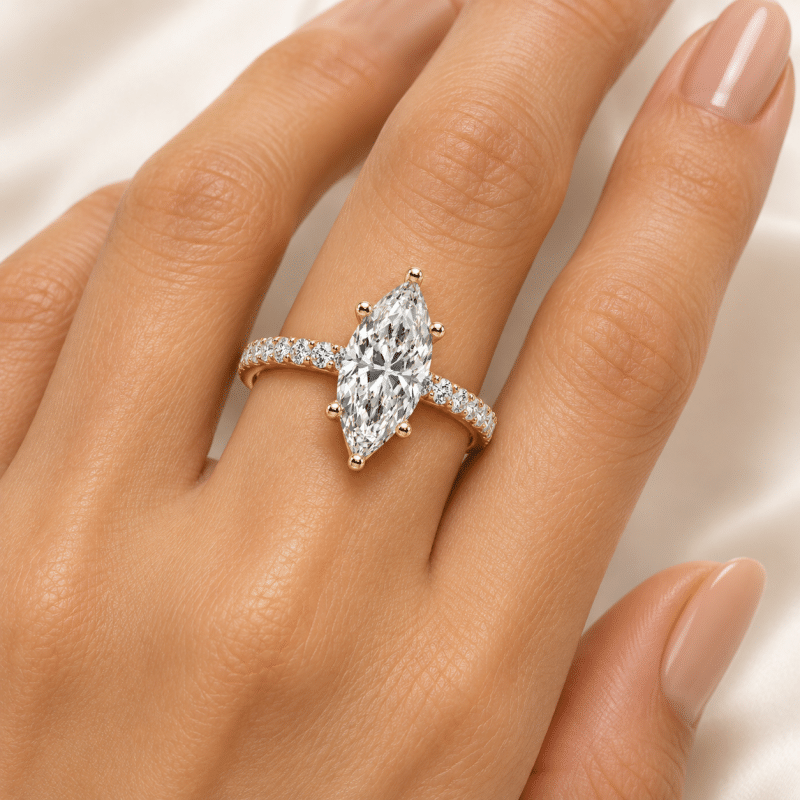
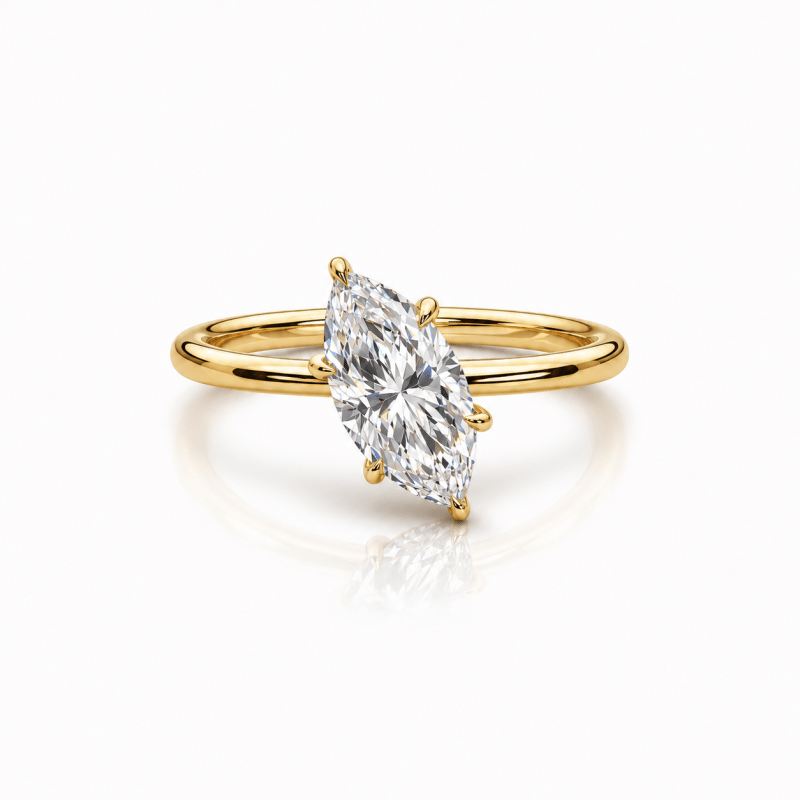
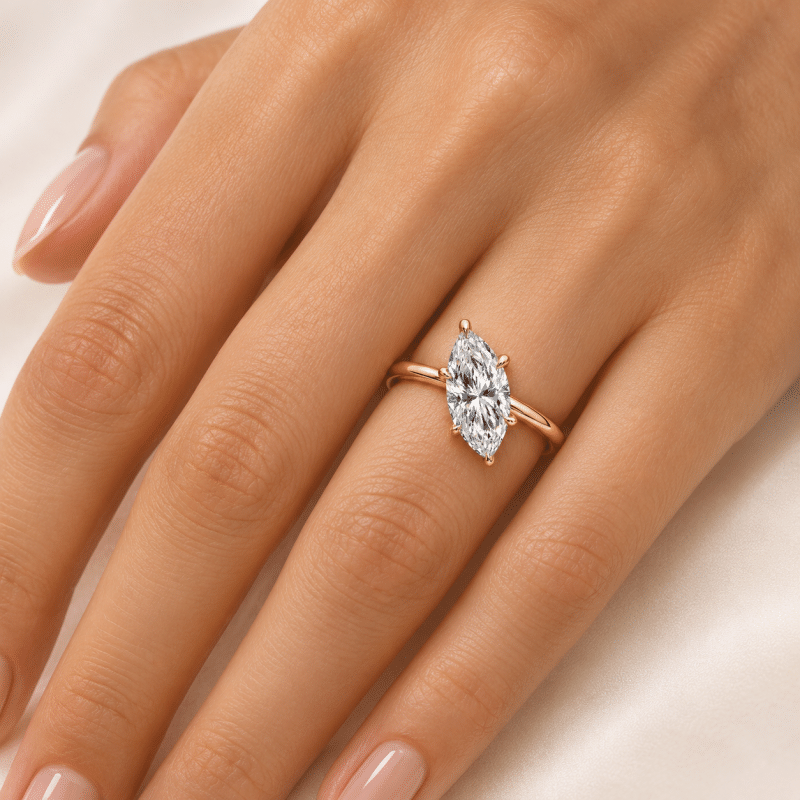
Choose a marquise shape lab grown diamond with captivating sparkle & elegant silhouette. Create engagement ring with Marquise Shape Diamond.
Some diamond shapes whisper. The marquise makes an entrance.
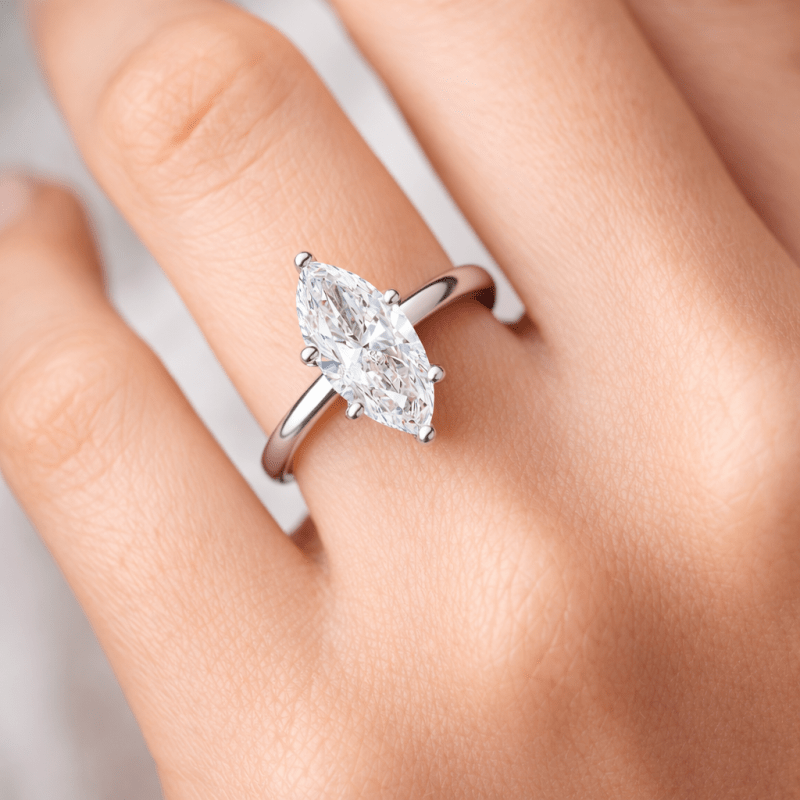
Moreover, With its elongated body, sweeping curves, and pointed ends, the marquise diamond has an unmistakable silhouette. Furthermore, It combines the theatrical presence of an antique jewel with the versatility of contemporary design. Furthermore, Set in a delicate solitaire or framed by a diamond halo, it brings individuality to jewellery created for life’s most meaningful moments.
Its appeal extends beyond appearance. Moreover, Understanding its proportions, craftsmanship, and setting requirements helps turn an attractive diamond into a considered purchase.
What Is a Marquise Shape Lab Grown Diamond ?
A marquise diamond has an elongated outline with two pointed ends, often compared to a boat or a stylised leaf. Furthermore, It is generally fashioned as a brilliant cut, with facets arranged to produce brightness, fire, and scintillation—the flashes of light that appear as the diamond moves.
Moreover, A lab grown diamond is a real diamond produced in a controlled environment rather than formed underground. Furthermore, It has essentially the same chemical composition, crystal structure, and physical properties as a natural diamond.
Moreover, It should not be confused with cubic zirconia or moissanite. Those are diamond simulants: different materials that resemble diamond.
Why the Marquise Shape Commands Attention
The marquise cut creates visual drama through proportion.
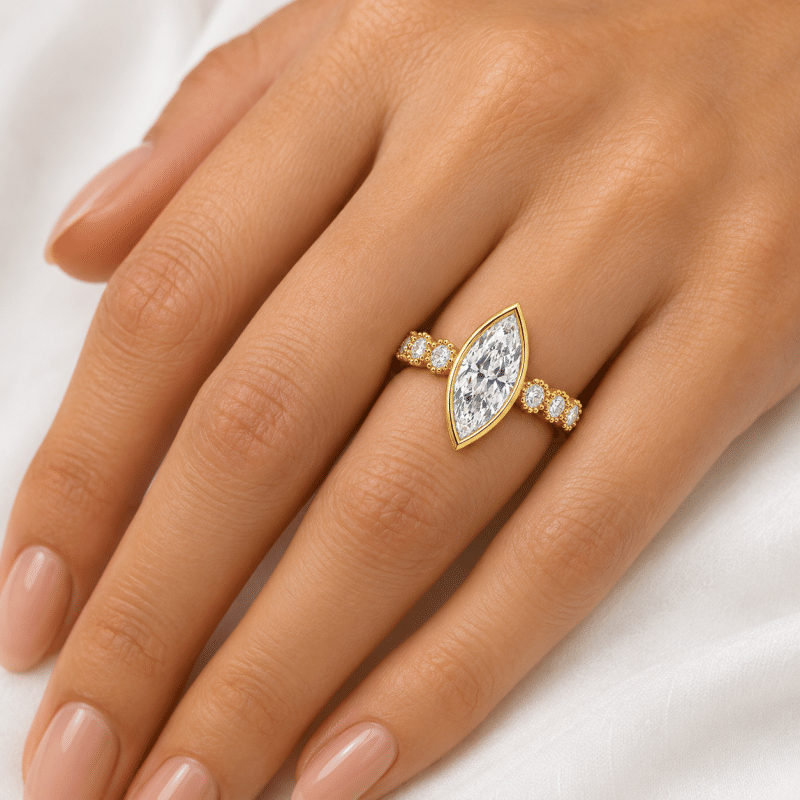
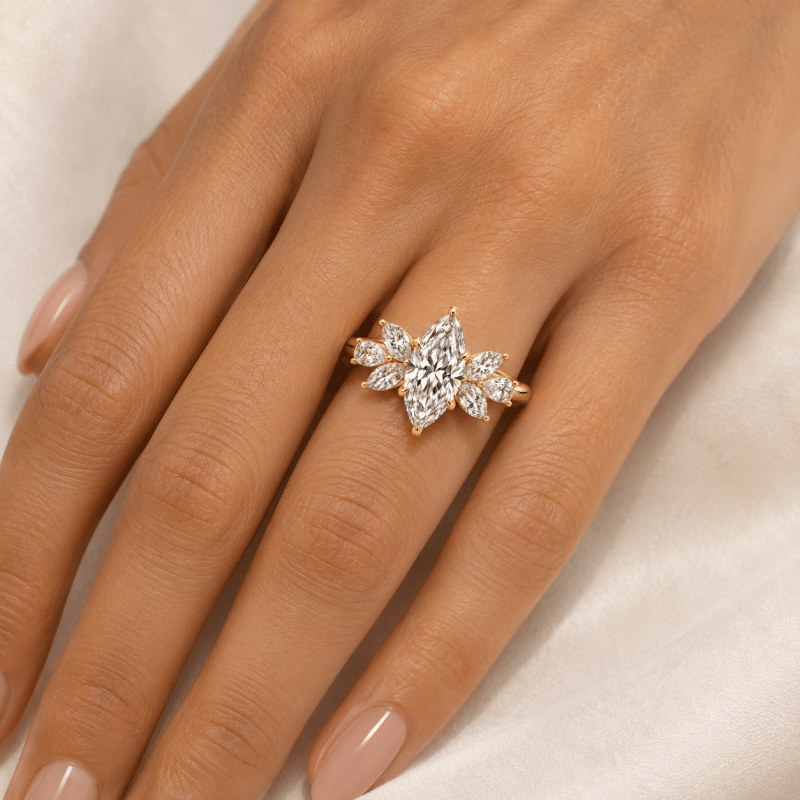
Moreover, Its elongated outline can appear generous for its carat weight, although the actual face-up size depends on its measurements and depth. Furthermore, On the hand, a lengthwise setting can also create the impression of longer, more slender fingers.
Then there is its character. Moreover, The pointed tips give the shape definition, while the curved sides soften its geometry. Moreover, This interplay makes it equally suited to restrained minimalism and ornate, vintage-inspired jewellery.
0.70 carat Marquise shape lab grown diamond – IGI 492122289
0.75 carat Marquise shape lab grown diamond – IGI 529258818
0.9 carat Marquise lab diamond – IGI 533220686
0.90 carat Marquise shape lab grown diamond – IGI 539203722
1 carat Marquise lab diamond – IGI 567377687
1 carat Marquise shape lab grown diamond
1.01 carat Marquise shape lab grown diamond – IGI 567377688
1.5 carat Marquise shape lab grown diamond – IGI 514265273
Understanding Proportion and Symmetry
Carat weight tells only part of the story.
The length-to-width ratio describes how elongated a marquise diamond appears. Moreover, A higher ratio produces a longer, narrower silhouette; a lower ratio creates a fuller outline. Furthermore, Neither is automatically superior. The right proportion depends on personal preference and the intended design.
Symmetry deserves close attention. Furthermore, Both sides should form balanced curves, and the pointed ends should align neatly. Moreover, Uneven shoulders or a visibly off-centre outline can interrupt the shape’s elegance.
Review the diamond’s dimensions alongside clear photographs or video. Moreover, Two stones of equal weight may look surprisingly different.
The Bow-Tie Effect: What to Look For
Marquise diamonds can display a darker area across their centre, commonly called a bow tie. Additionally, This results from the way their facets interact with light and the viewer’s position.
Its visibility varies.
Furthermore, A subtle contrast pattern may contribute to a lively appearance, while a pronounced, persistent dark band can distract from the diamond’s brightness. Furthermore, Assess the stone in motion and under different lighting conditions where possible. Moreover, A single photograph rarely captures its full optical performance.
The objective is an appealing balance of brightness, contrast, and sparkle across the diamond.
Choosing Colour, Clarity, and Carat Weight
A beautiful marquise diamond requires balance rather than an isolated pursuit of grades.
Colour influences how warm or colourless the diamond appears. Moreover, The setting metal and the stone’s individual characteristics affect how that colour is perceived.
Clarity describes internal inclusions and external blemishes. Furthermore, Their location matters as well as their size: a feature near a pointed tip may deserve particular attention when assessing durability and setting suitability.
Carat weight measures mass, not visible size. Compare dimensions and appearance alongside weight.
Furthermore, An independent grading report provides useful information about identity and quality. Pair it with a careful visual assessment.
2 carat Marquise lab diamond ring
2.50 carat marquise lab diamond ring
3 carat marquise lab diamond ring
3 carat Marquise shape lab diamond ring
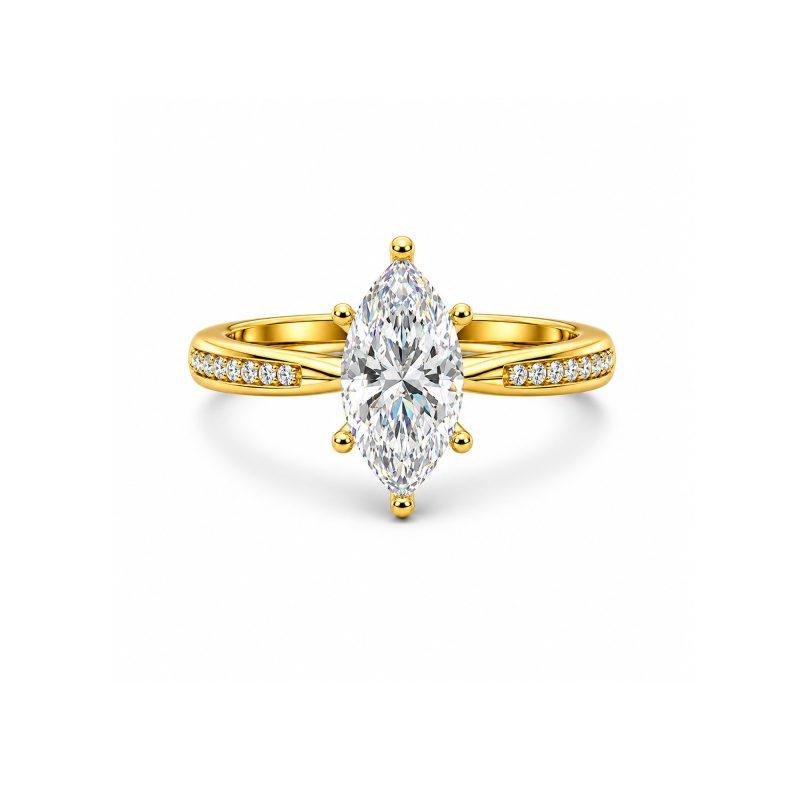
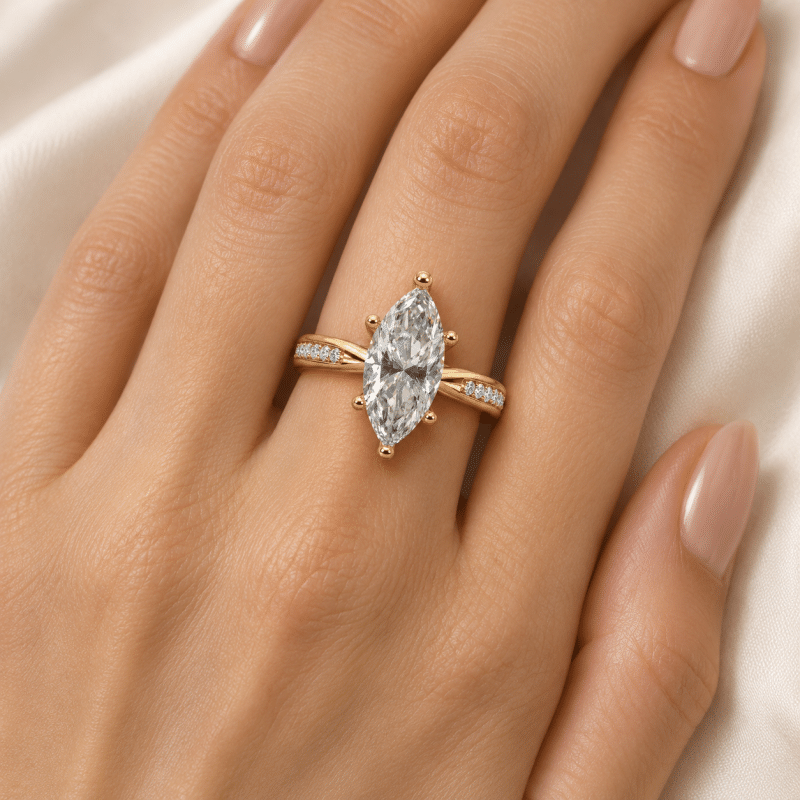
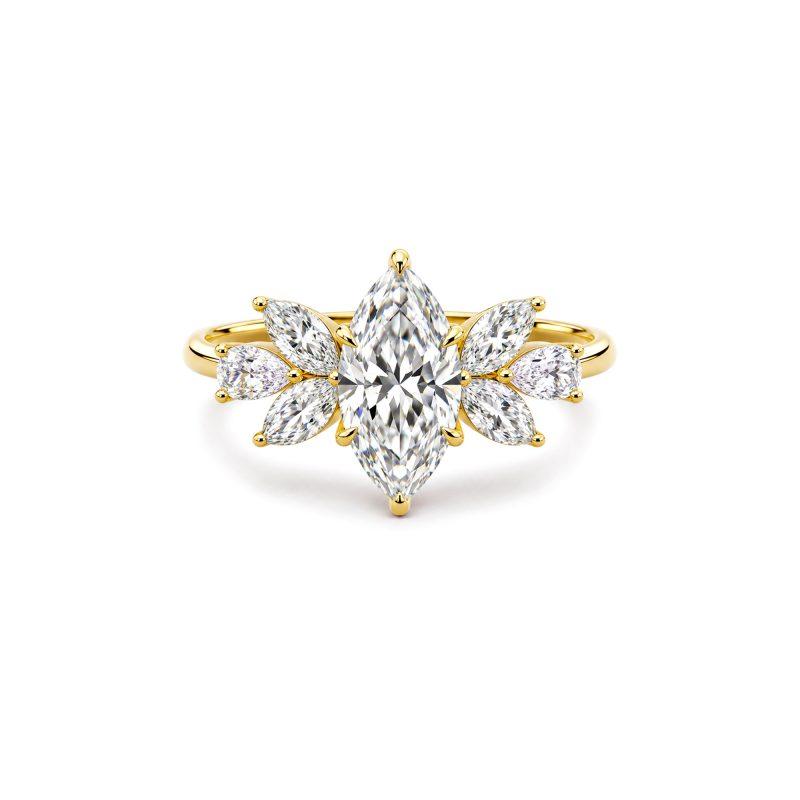
6 Prong marquise lab diamond ring with side diamonds
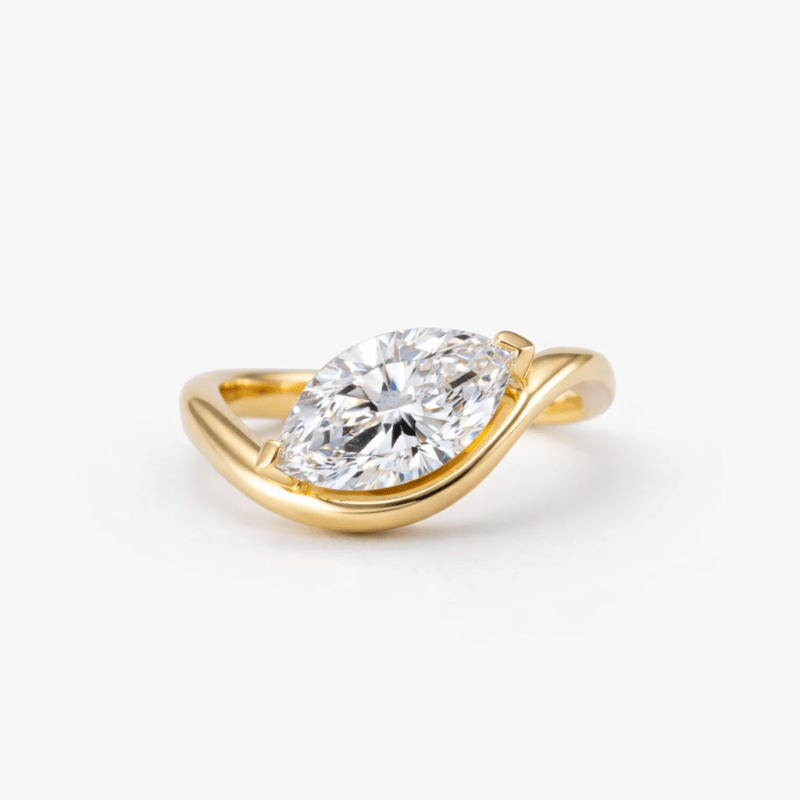
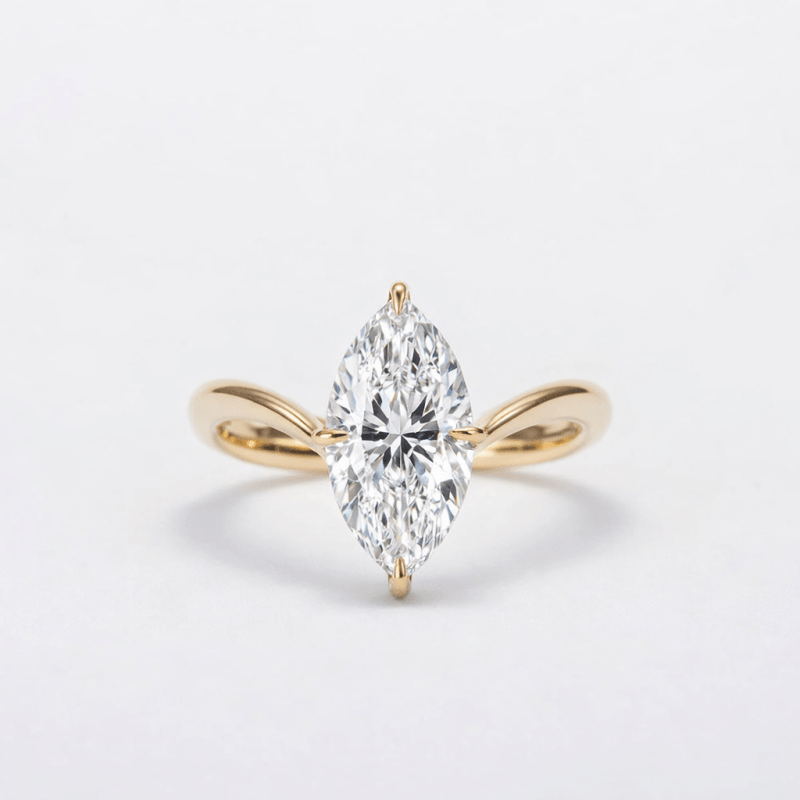
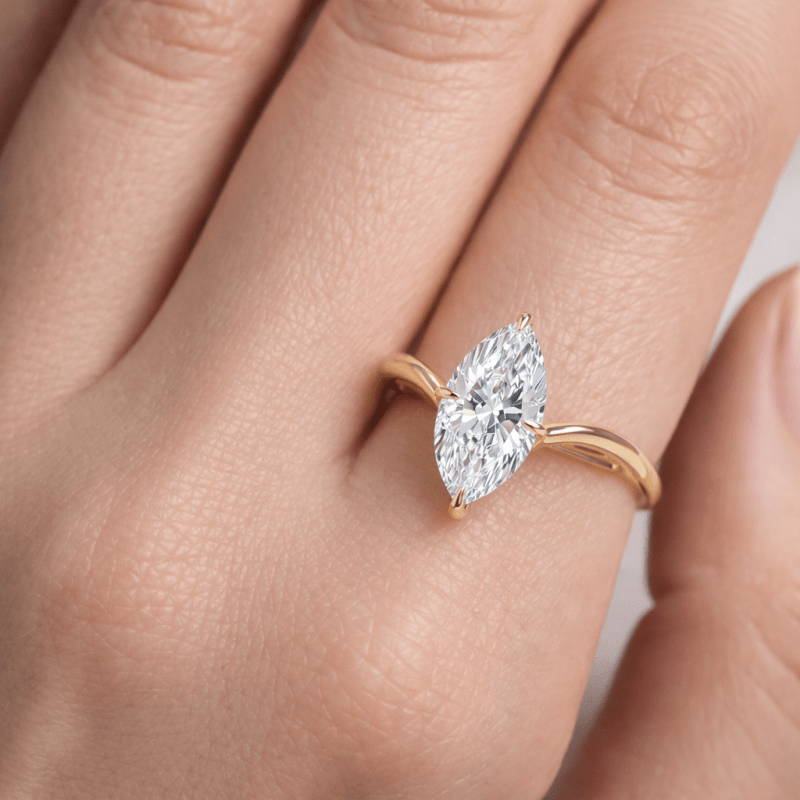
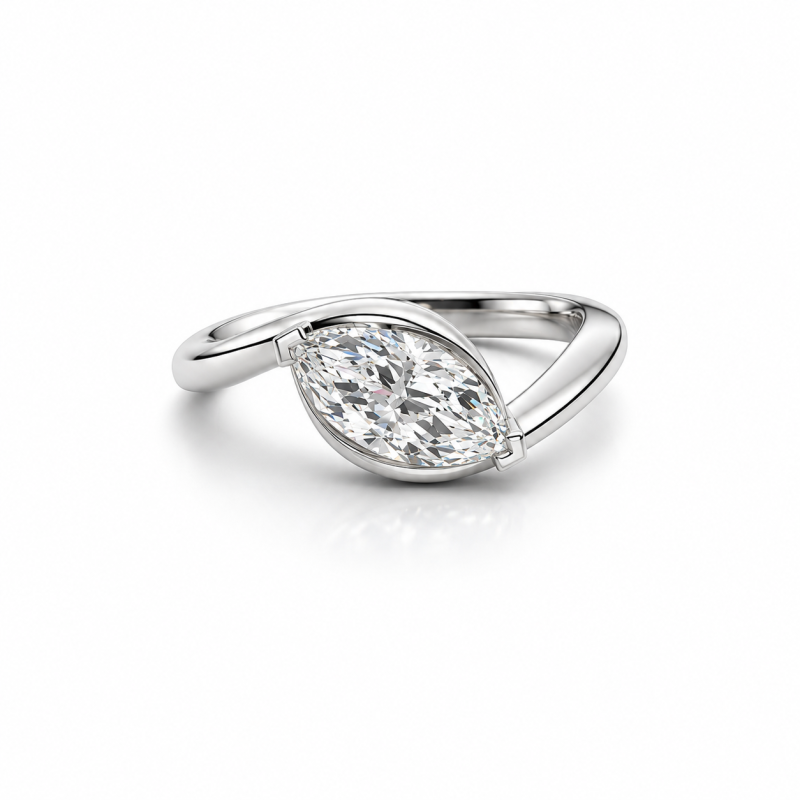
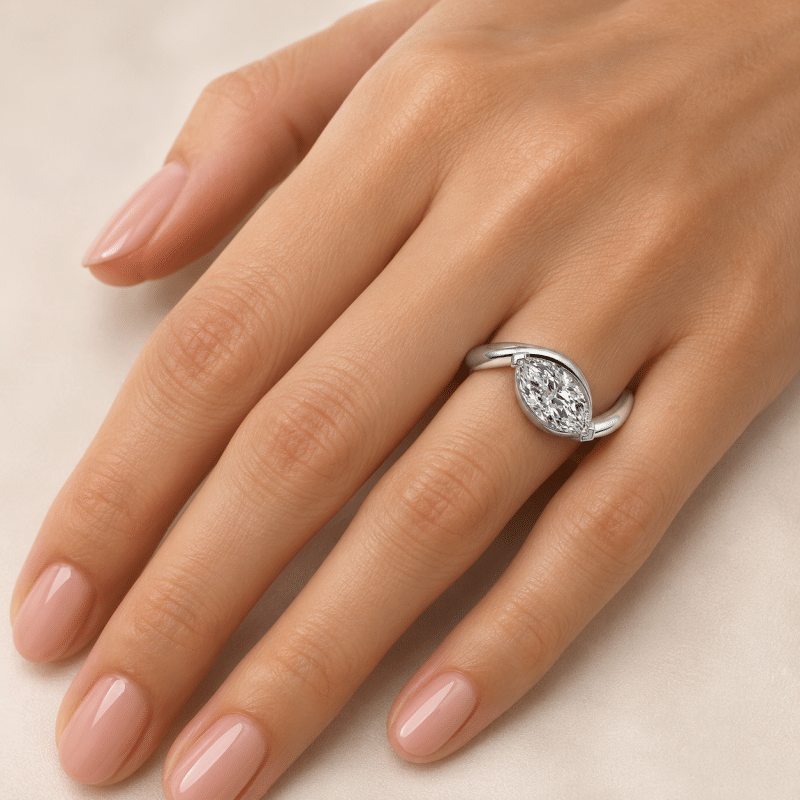
Bezel Bypass Marquise Lab Diamond Ring
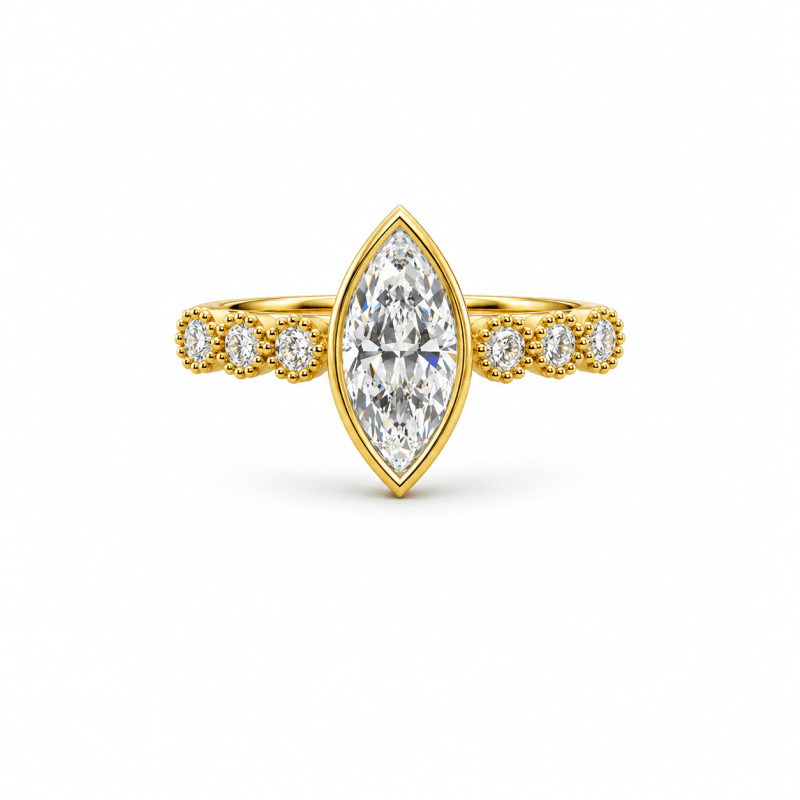
Bezel set Marquise lab Diamond Ring
Floral Marquise lab diamond ring
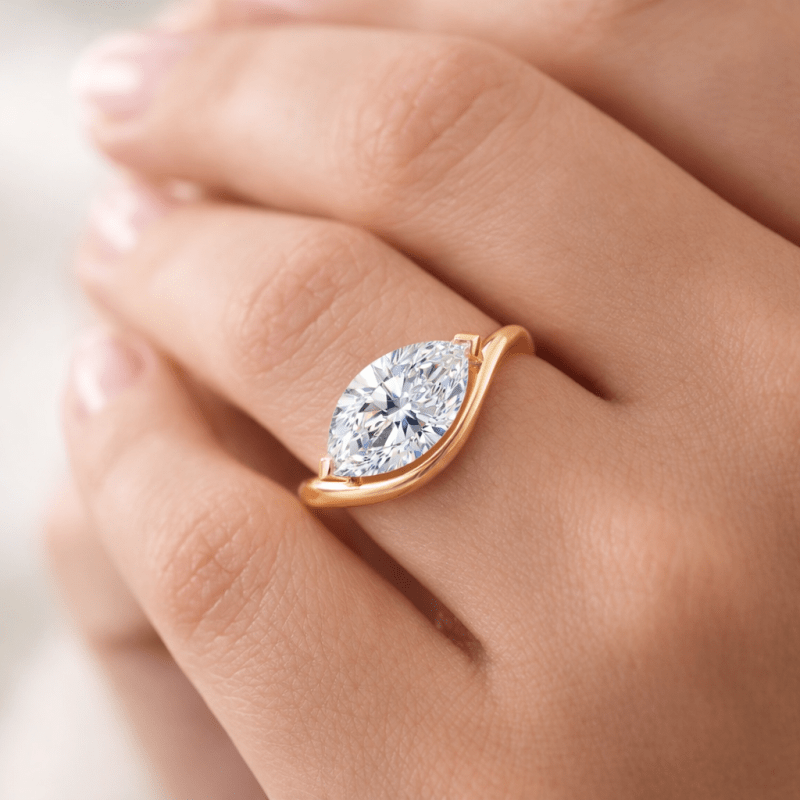
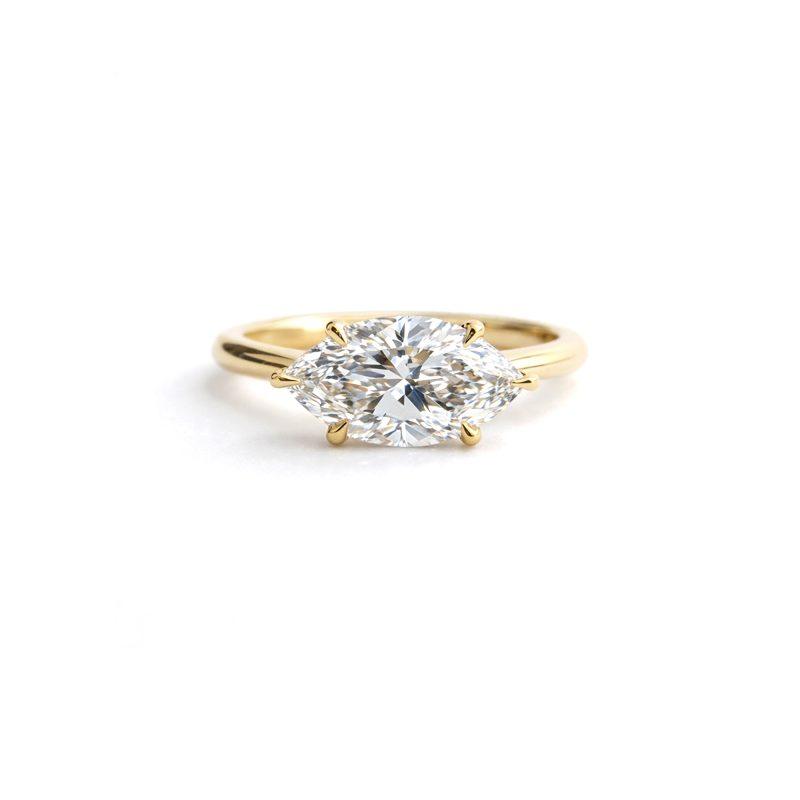
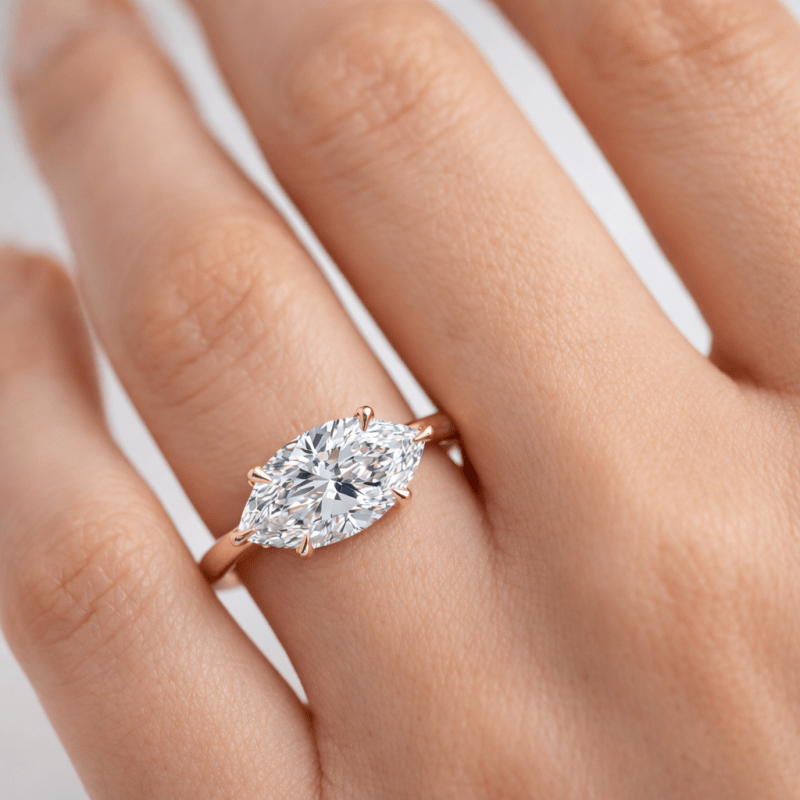
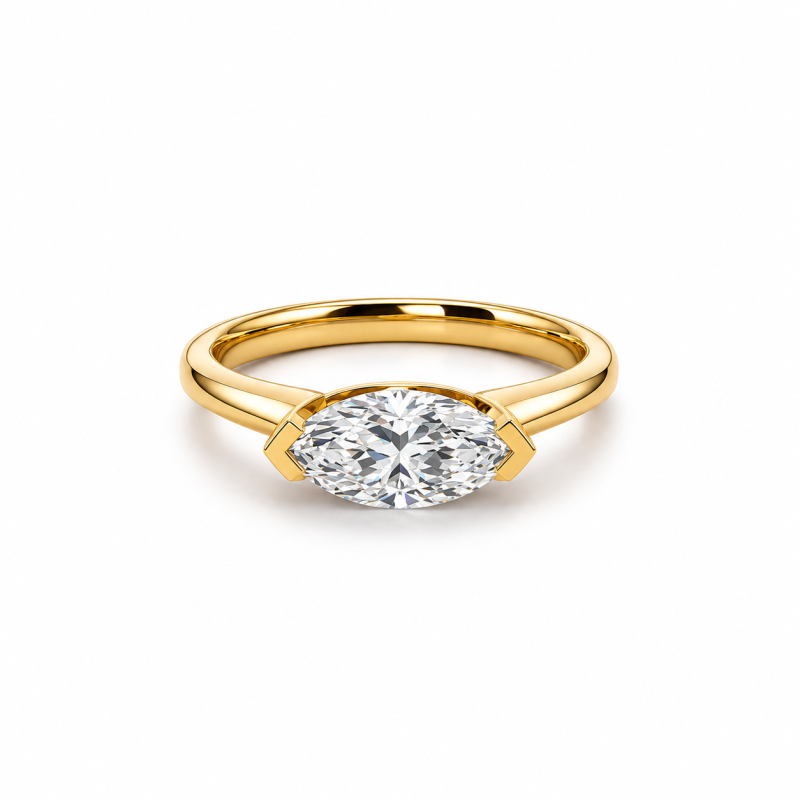
Horizontal marquise lab diamond ring
Marquise Lab Diamond engagement ring
Marquise lab diamond ring in Basket Setting
Marquise lab diamond ring in Diagonal setting
Settings That Complement and Protect
The marquise diamond’s pointed ends require thoughtful protection.
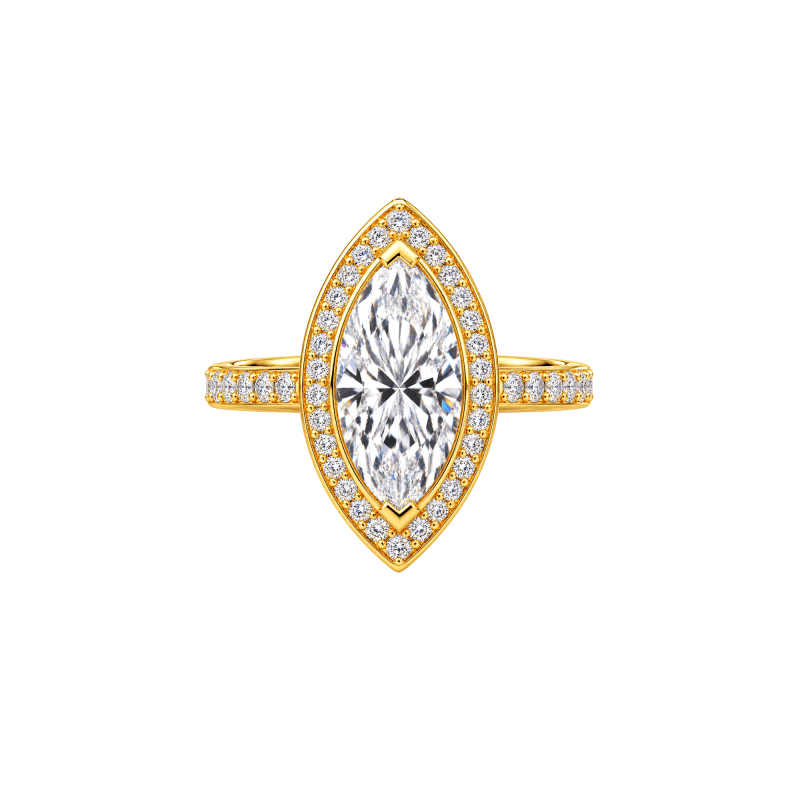
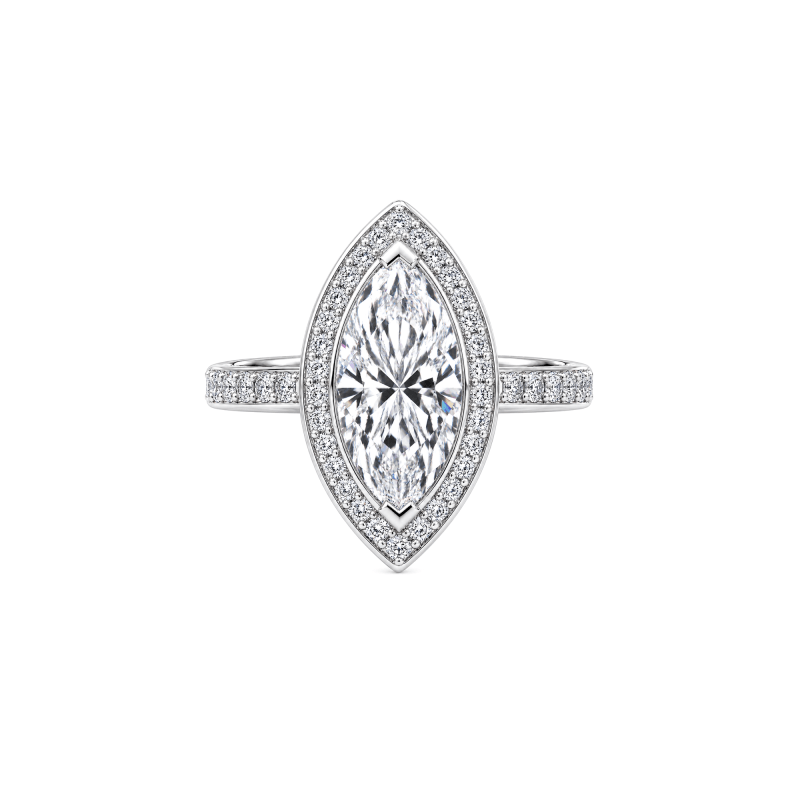
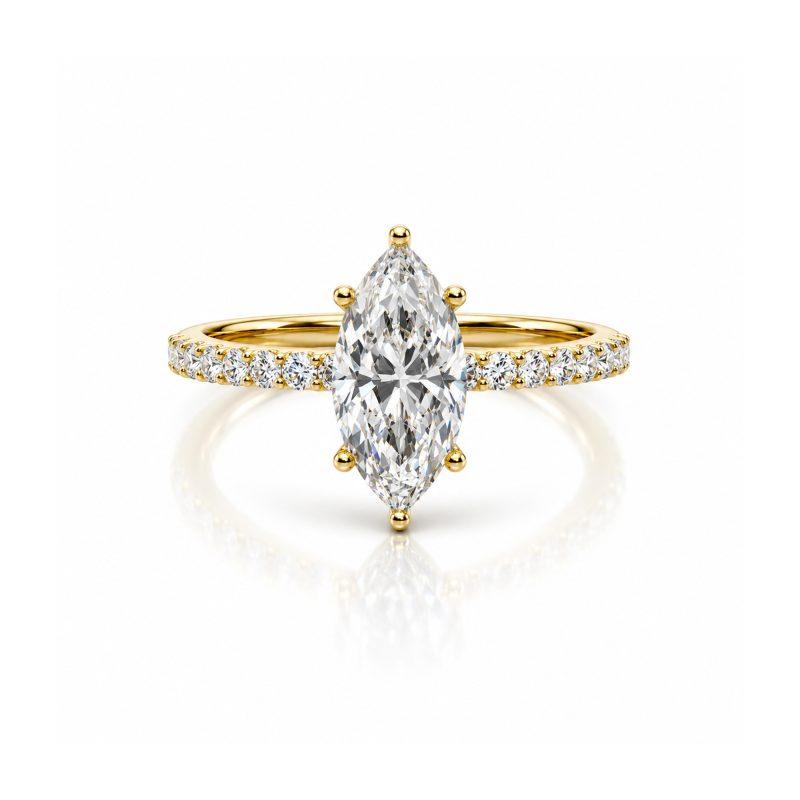
Moreover, V-shaped prongs can help shield the tips, while a well-designed bezel surrounds the outline with metal. Good craftsmanship is essential in either approach.
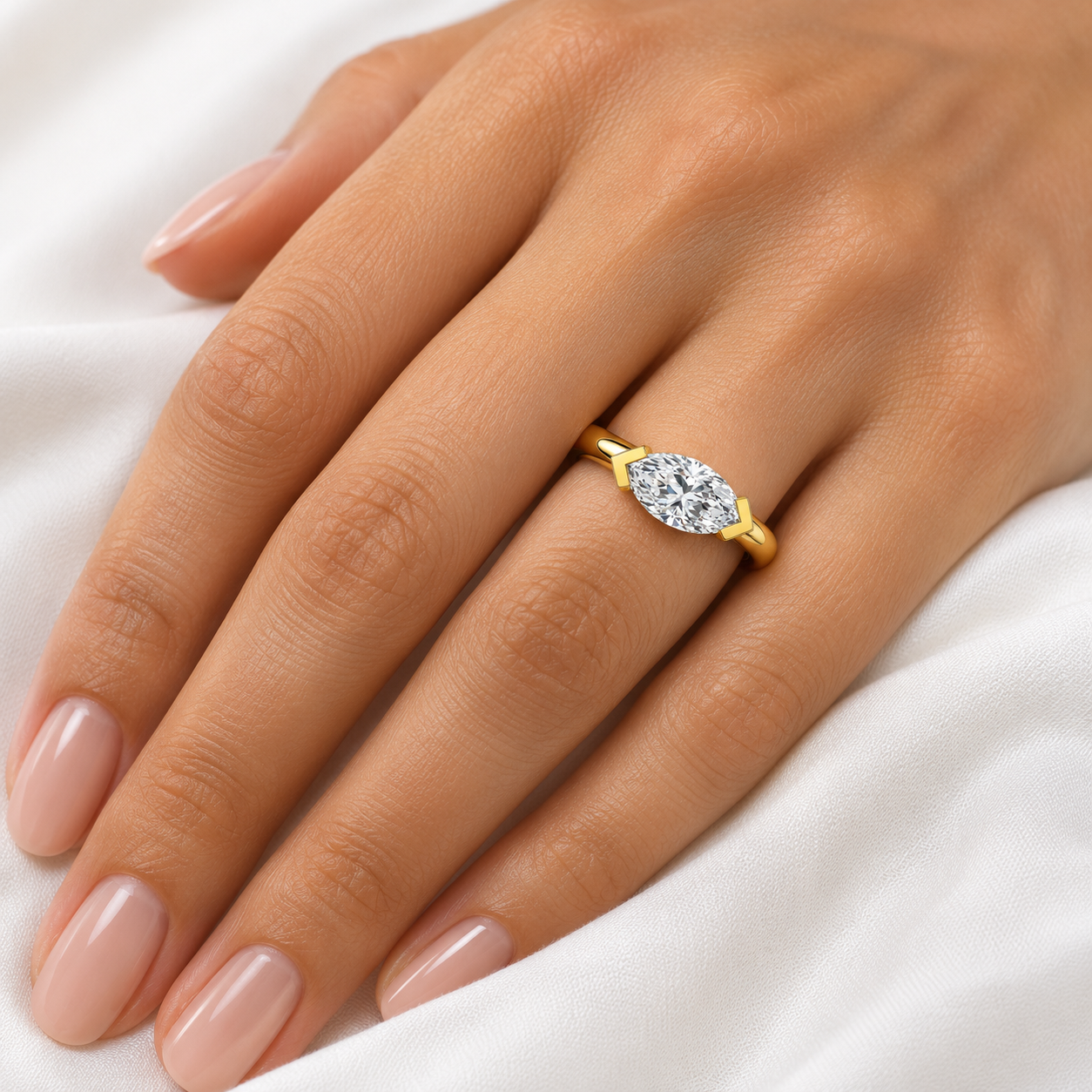
Furthermore, For styling, a solitaire emphasises the silhouette. Furthermore, A halo adds a luminous border, and an east-to-west orientation gives the shape a contemporary expression. Moreover, Yellow gold introduces warmth; white gold and platinum create a cooler visual setting.
Moreover, The best design combines beauty, comfort, and secure construction.
A Distinctive Diamond, Chosen with Confidence
The marquise shape lab grown diamond offers an expressive combination of graceful lines and brilliant-cut sparkle.
Furthermore, Choose with attention to symmetry, light performance, grading information, and protection at the tips. Moreover, When these details work together, the result is more than an impressive centre stone. It is a jewel with presence—personal, elegant, and designed to be treasured.