Lab grown diamonds

Oval Shape Lab Grown Diamond: A Guide to Brilliance and Beauty

Celebrate your story with an oval shape lab grown diamond. Discover graceful curves and captivating sparkle for an Customized engagement ring.

Some diamond shapes command attention through sharp geometry. The oval captivates through movement.

Its elongated silhouette draws the eye along a sweep of light, balancing the softness of rounded curves with a distinctive sense of proportion. Furthermore, In an engagement ring, it feels romantic. In a pendant, quietly assured. As a lab grown diamond, it brings this enduring aesthetic into a contemporary jewellery story.

Yet choosing an oval shape lab grown diamond requires more than admiring its outline. Proportions, faceting, colour, clarity, and the interplay of light all influence its character. Furthermore, Understanding these details makes the difference between selecting a diamond that looks impressive on paper and one that is beautiful in person.

Oval Shape Lab Grown Diamond

What Is an Oval Shape Lab Grown Diamond?

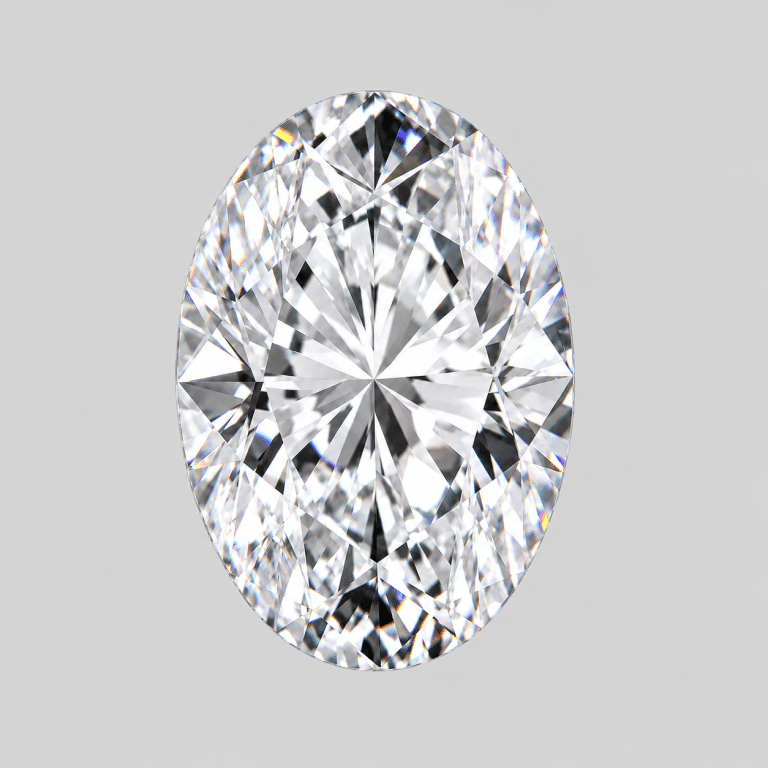
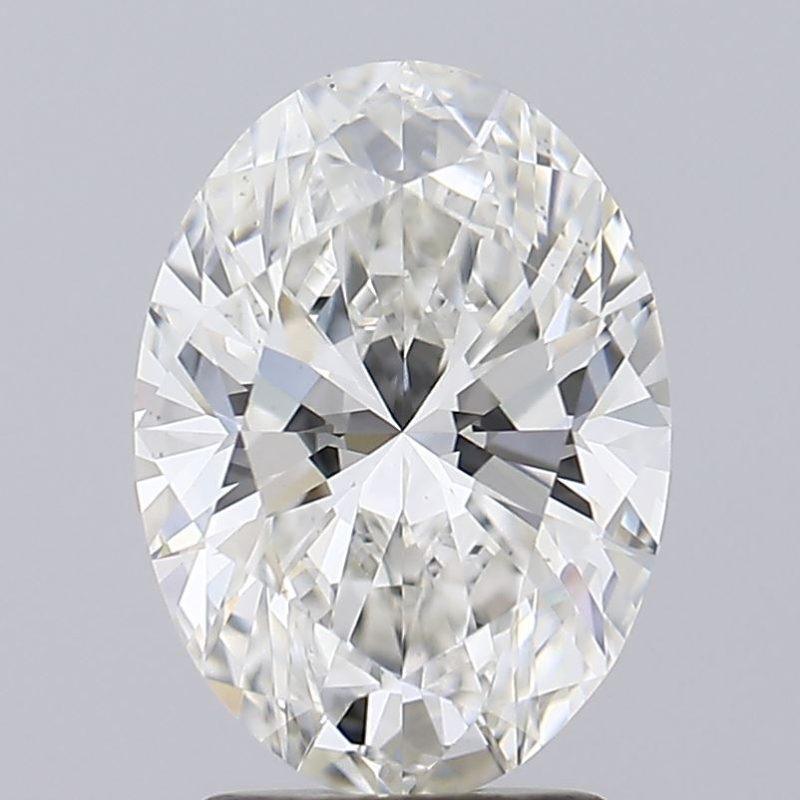
An oval shape lab grown diamond is a laboratory-created diamond fashioned into an elongated, rounded shape, usually with brilliant-style faceting designed to produce sparkle.

It is a diamond, rather than a diamond simulant such as cubic zirconia or moissanite. Furthermore, Laboratory grown diamonds share the essential chemical composition and crystal structure of natural diamonds. Moreover, Their origin differs: one grows in a controlled technological environment, while the other forms through geological processes.

The oval shape gives this material its distinctive visual expression. Furthermore, With no pointed corners and a continuous curved perimeter, it offers a softer alternative to angular shapes such as emerald or princess cuts.

The Allure of the Oval Silhouette

An oval diamond possesses a particular visual eloquence. Moreover, Its length creates presence, while its rounded ends keep the appearance graceful.

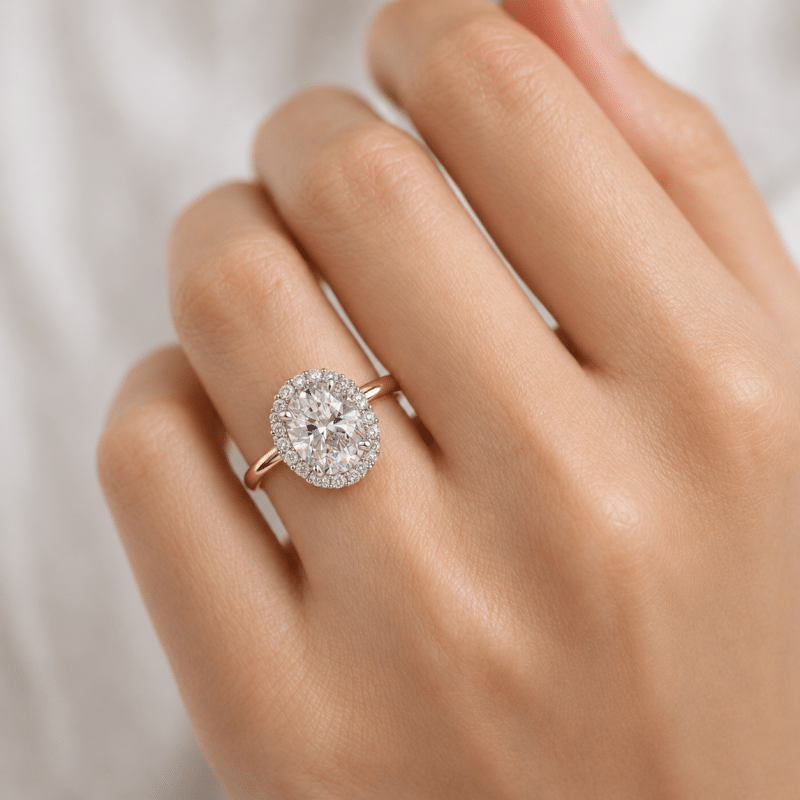
On the hand, an oval set lengthwise can create the impression of longer, more slender fingers. Additionally, Turned horizontally in an east–west setting, the same shape takes on a more contemporary character.

Oval diamonds can also offer generous face-up dimensions relative to their carat weight. However, this varies with their proportions and depth; two stones of equal weight may look noticeably different in size.

Carat tells you weight. The outline tells another part of the story.

1 carat Oval shape lab grown diamond

Original price was: د.إ3,600.00.Current price is: د.إ1,390.00.

1.5 Carat Oval lab diamond IGI 551208298

Original price was: د.إ3,528.30.Current price is: د.إ1,640.00.

1.64 Carat Oval lab diamond IGI 567356159

Original price was: د.إ3,857.00.Current price is: د.إ1,650.00.

2 Carat Oval lab diamond IGI 593375667

Original price was: د.إ5,956.00.Current price is: د.إ2,685.00.

2.22 Carat Oval lab diamond IGI 551274733

Original price was: د.إ4,276.00.Current price is: د.إ2,755.00.

2.31 Carat Oval lab diamond IGI 550230009

Original price was: د.إ4,571.00.Current price is: د.إ2,700.00.

2.39 Carat Oval lab diamond IGI 566397427

Original price was: د.إ4,681.00.Current price is: د.إ2,795.00.

2.49 Carat Oval lab diamond IGI 551274749

Original price was: د.إ4,961.00.Current price is: د.إ2,850.00.

Understanding Proportion: Length-to-Width Ratio

The length-to-width ratio describes how elongated an oval diamond appears. It is calculated by dividing the diamond’s length by its width.

A lower ratio produces a fuller, broader oval. Furthermore, A higher ratio creates a narrower, more elongated silhouette. Neither is inherently superior.

A softly rounded oval may suit someone drawn to classic proportions, while a slender shape can deliver a more dramatic impression. Moreover, The most pleasing choice depends on personal taste, finger proportions, and the intended setting.

Look beyond the ratio itself. The shoulders—the curved areas approaching each rounded end—should transition smoothly. An outline that appears uneven, overly squared, or unusually pointed can alter the diamond’s overall harmony.

Brilliance, Fire, and the Bow-Tie Effect

An attractive oval diamond should offer a lively balance of brightness, coloured flashes, and scintillation—the sparkle produced as the diamond, light source, or observer moves.

One feature deserves particular attention: the bow-tie effect.

Furthermore, This is a darker pattern that can appear across the centre of an oval diamond, resembling the shape of a bow tie. Moreover, It results from the interaction between the diamond’s faceting, viewing angle, and obstruction of light.

Its visibility varies. A subtle pattern may blend into the diamond’s contrast, while a pronounced, persistent dark band can interrupt its brightness.

Examine the diamond in motion and under different lighting conditions. Moreover, A single photograph cannot fully reveal whether the centre remains lively or appears consistently dark.

Choosing Colour and Clarity with Discernment

Colour and clarity grades provide useful information, but they do not replace visual assessment.

For colour, consider the diamond alongside the intended metal. Furthermore, White metals can make differences in body colour easier to notice, while yellow or rose gold changes the visual context. Moreover, Oval diamonds may also show colour differently across their length, making inspection of the entire stone worthwhile.

Clarity concerns internal inclusions and external blemishes. Their position, size, and visibility matter as much as the grade alone. A feature directly beneath the table—the large central facet—may be more noticeable than one nearer the edge.

Seek a diamond whose appearance satisfies you at normal viewing distance. Furthermore, The objective is visual beauty, not simply the highest possible grades.

Why Carat Weight Is Only Part of the Picture

A larger carat number does not automatically mean a more impressive diamond.

Carat measures weight, whereas visible size depends on dimensions and proportions. Moreover, A diamond that carries considerable weight in its depth may present a smaller face-up outline than expected.

Assess length, width, and depth together with light performance. Furthermore, A broad appearance offers little advantage if the diamond looks dull or transparent in areas.

The strongest choice brings scale and sparkle into equilibrium.

Settings That Complement an Oval Lab Grown Diamond

An oval diamond adapts beautifully to several jewellery styles.

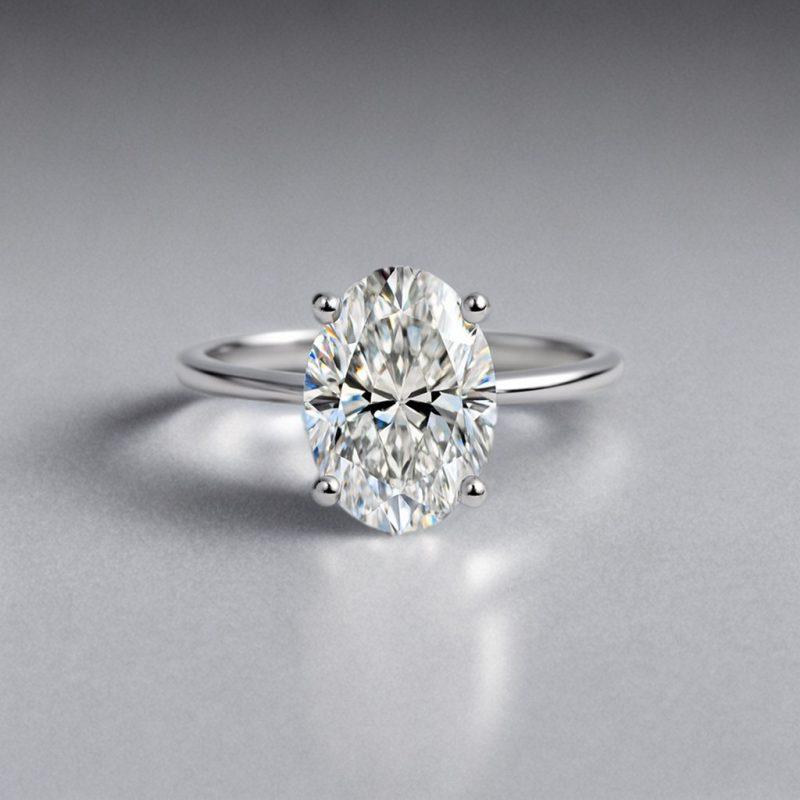
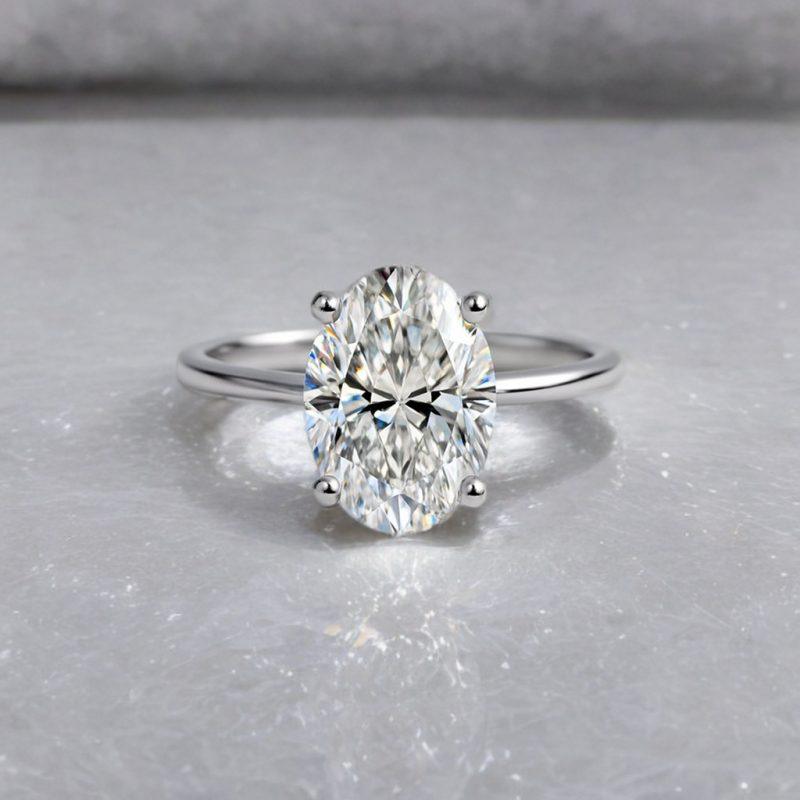
Solitaire settings give the outline room to speak. A restrained band places the emphasis on the diamond’s proportions and shifting light.

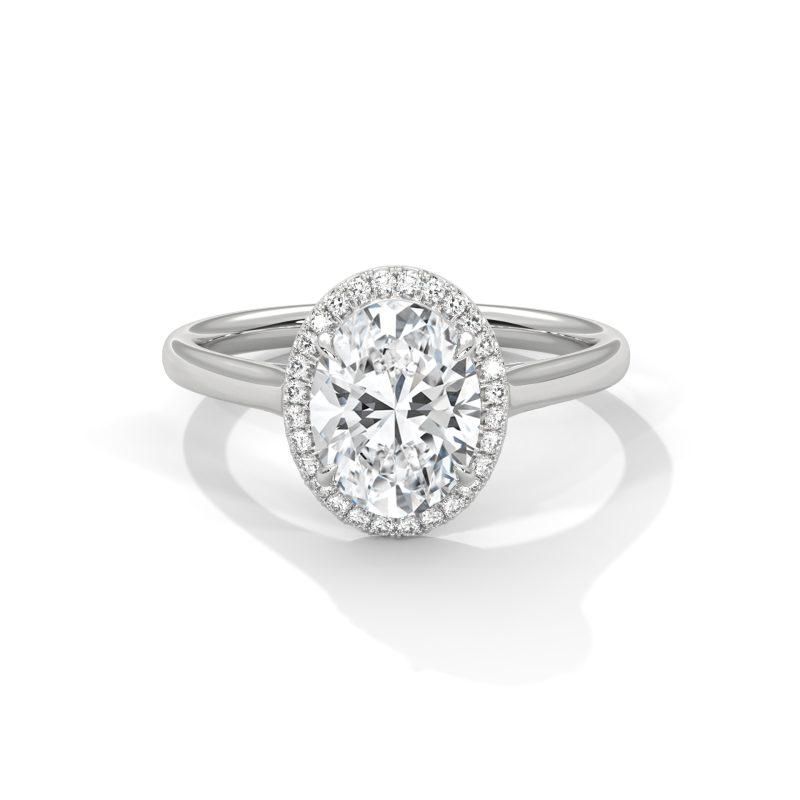
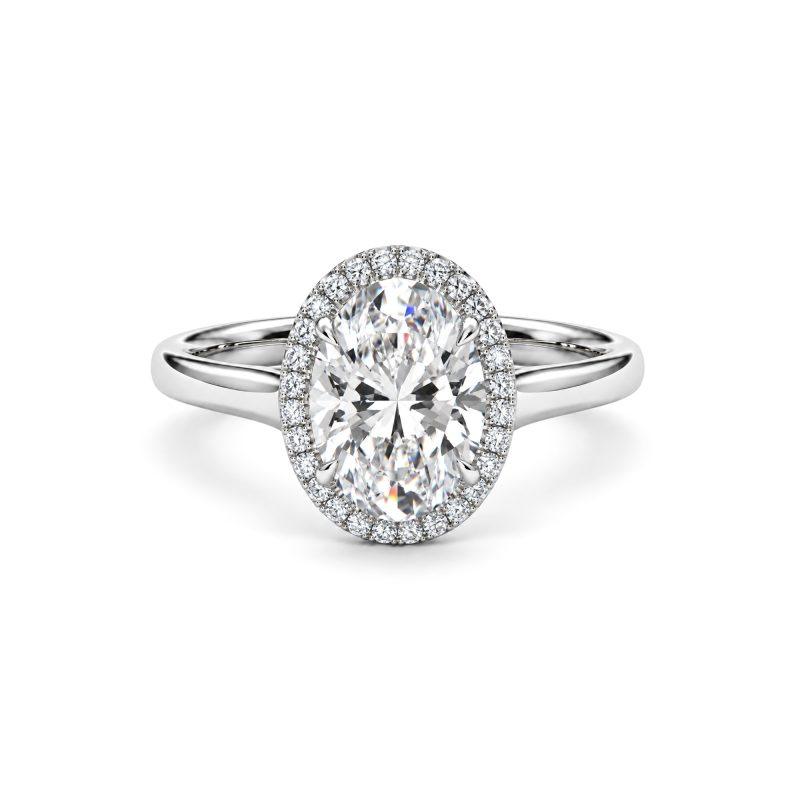
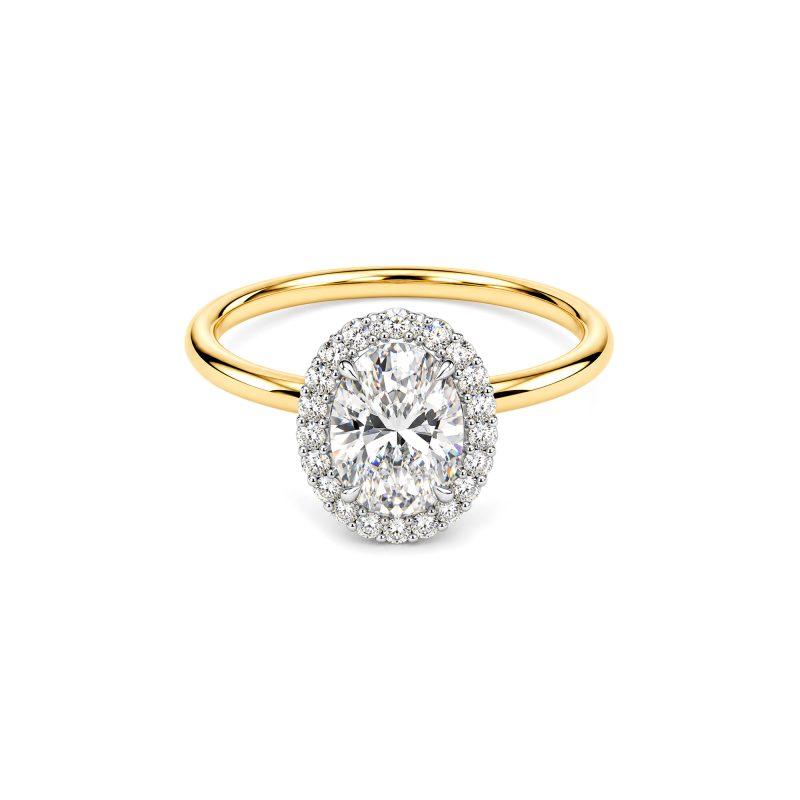
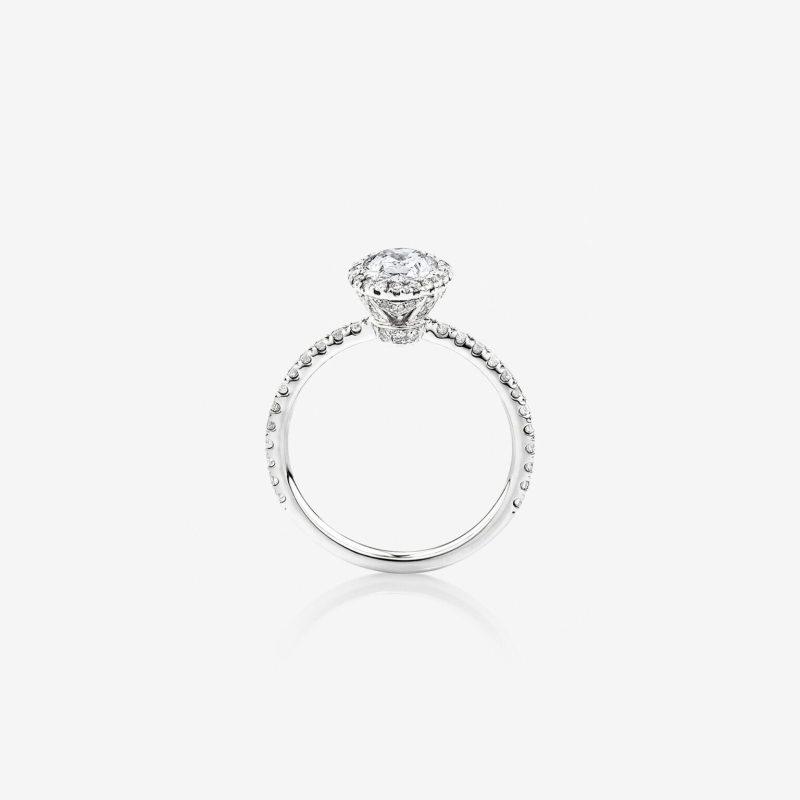
Halo settings frame the centre with smaller stones, adding texture and expanding the overall visual footprint.

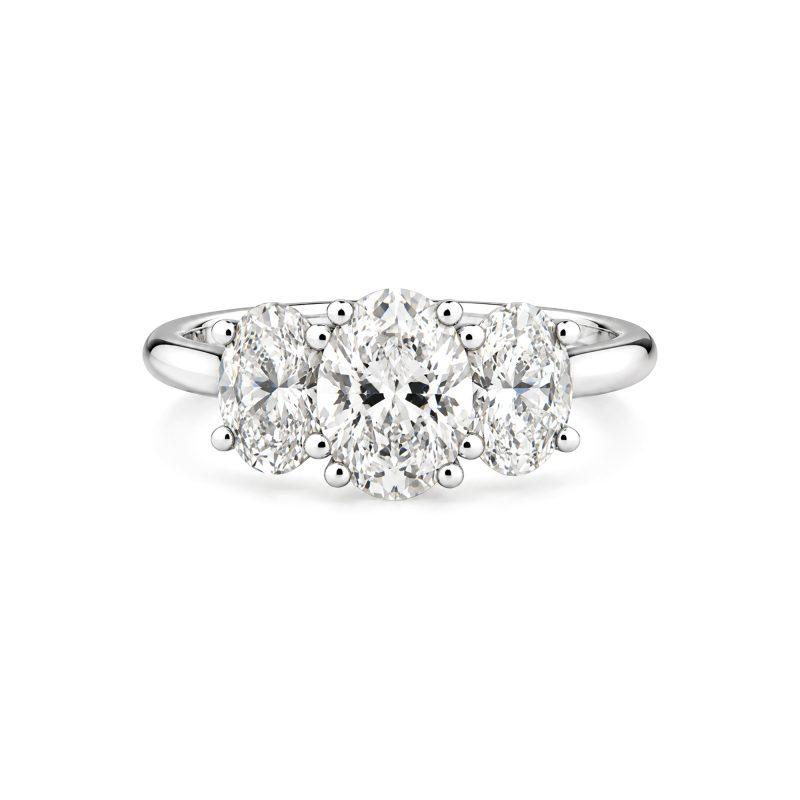
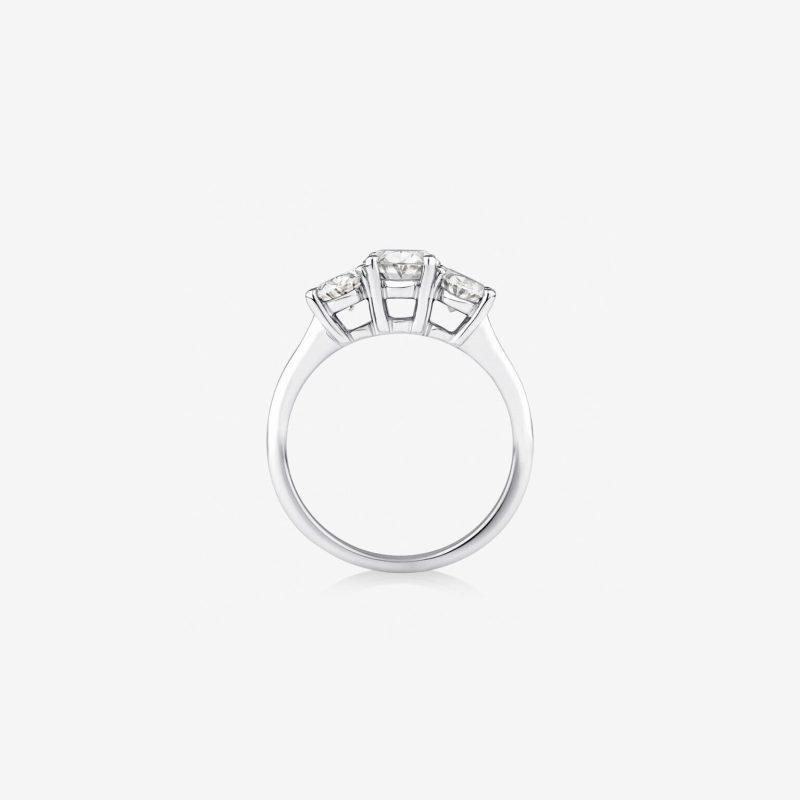
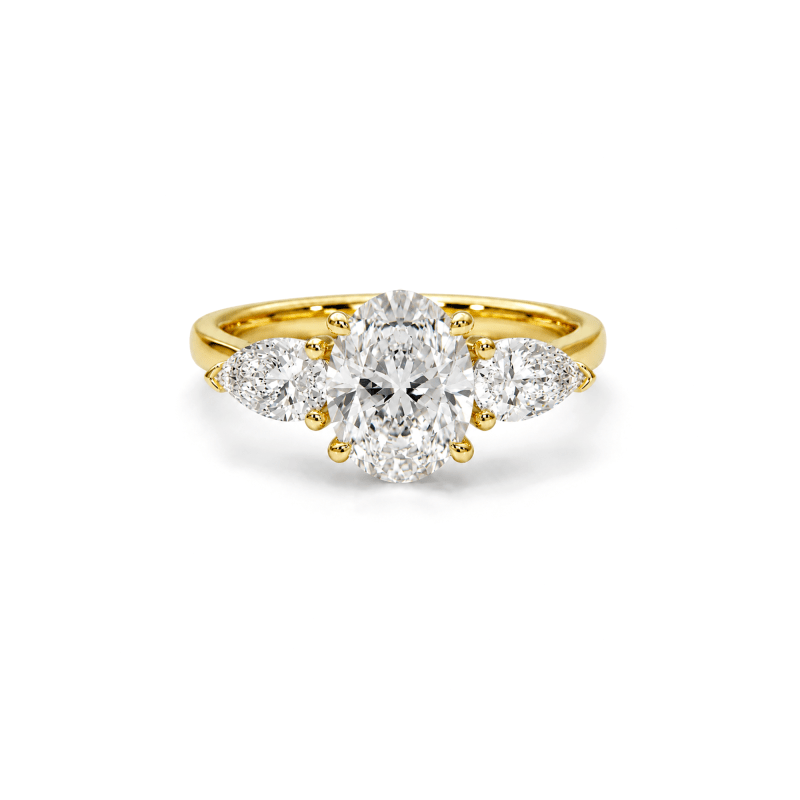
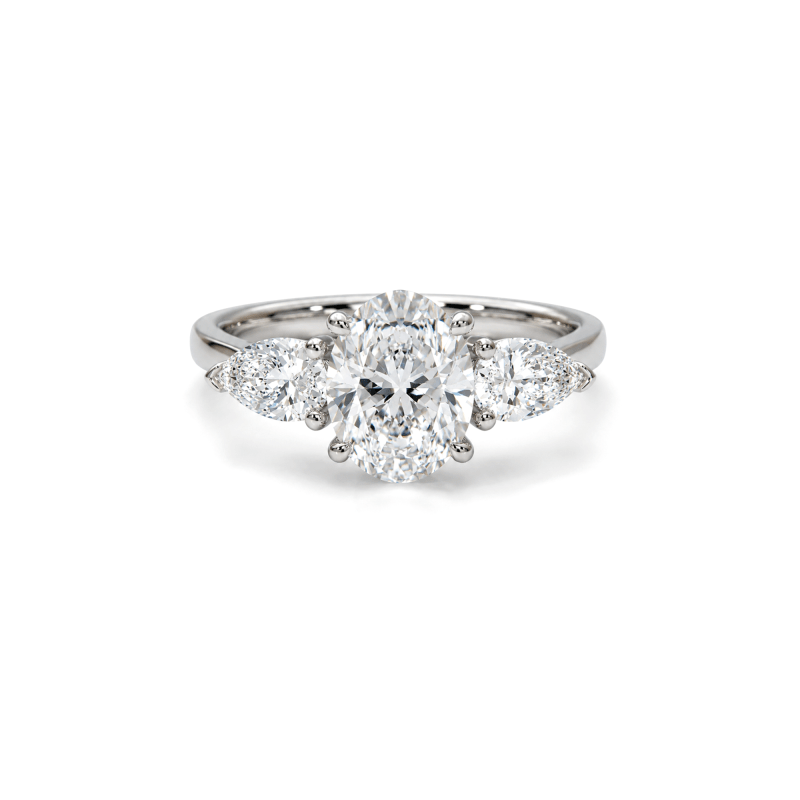
Three-stone settings introduce balance and symbolism. Carefully chosen side stones can complement the oval without competing with it.

Bezel settings surround the diamond with a continuous metal rim, creating a clean, sculptural finish.

The setting should also suit daily wear. Consider its height, how securely it holds the diamond, and whether it sits comfortably beside a wedding band.

Evaluating Quality Before You Buy

A grading report from an established gemmological laboratory helps document a diamond’s identity and assessed characteristics. Review the report alongside the actual stone, photographs, or clear video.

For fancy shapes such as ovals, grading information alone does not fully communicate visual performance. An overall cut grade may not be provided, depending on the laboratory and report.

Before purchasing, assess:

  • The symmetry and smoothness of the oval outline.

  • Face-up dimensions in relation to carat weight.

  • Brightness across the centre and rounded ends.

  • The visibility of any bow-tie pattern.

  • Colour and inclusions under realistic viewing conditions.

  • The seller’s return terms and aftercare provisions.

If environmental or ethical claims influence your decision, ask for specific supporting information. Laboratory origin alone does not establish the full environmental footprint or working conditions throughout a supply chain.

Caring for an Oval Lab Grown Diamond

Diamonds are hard, but they still benefit from thoughtful care.

Clean the jewellery gently with warm water, mild dish soap, and a soft brush, provided the setting and any accompanying gemstones are suitable for this method. Moreover, Rinse carefully and dry with a lint-free cloth.

Remove the piece before activities that expose it to hard impacts or abrasive materials. Furthermore, Store it separately to prevent scratching other jewellery, and have the setting checked periodically.

A clean diamond allows light to move through it more effectively. Often, restoring its sparkle begins with removing an ordinary film of lotion or oil.

Choosing a Diamond with Lasting Appeal

The finest oval shape lab grown diamond for you is one whose proportions, light, and presence feel right together.

Look for a graceful outline. Watch how the facets respond as the stone moves. Furthermore, Consider how it will sit within the jewellery you intend to wear.

Beauty emerges from that complete composition: the diamond, the setting, and the person who gives it meaning.

3 carat oval lab grown diamond ring

Original price was: د.إ5,890.00.Current price is: د.إ5,390.00.

3 oval lab diamond ring

Original price was: د.إ6,600.00.Current price is: د.إ4,570.00.

4 Carat Oval lab diamond IGI 566312933

Original price was: د.إ8,120.00.Current price is: د.إ4,850.00.

4 Carat oval lab diamond IGI 593375679

Original price was: د.إ7,570.00.Current price is: د.إ4,860.00.

Halo Oval lab diamond ring

Original price was: د.إ5,890.00.Current price is: د.إ4,480.00.

Oval Cut Lab Diamond Halo Engagement Ring

Original price was: د.إ4,500.00.Current price is: د.إ3,350.00.

Oval Cut Lab Diamond Halo Ring

Original price was: د.إ4,646.00.Current price is: د.إ3,690.00.

Leave a Reply

Your email address will not be published. Required fields are marked *

15 + 10 =